
 MENU
MENUTechnical Evaluation of Rebar Butt-Forging Equipment in Reinforced Concrete Construction
In modern building construction, particularly in earthquake-resistant reinforced concrete structures, the quality of rebar connections plays a decisive role in overall structural performance. Butt-forging welding machines are among the most critical and technically sensitive construction equipment, and their reliability depends entirely on design integrity, manufacturing quality, operational stability, and compatibility with various rebar types.
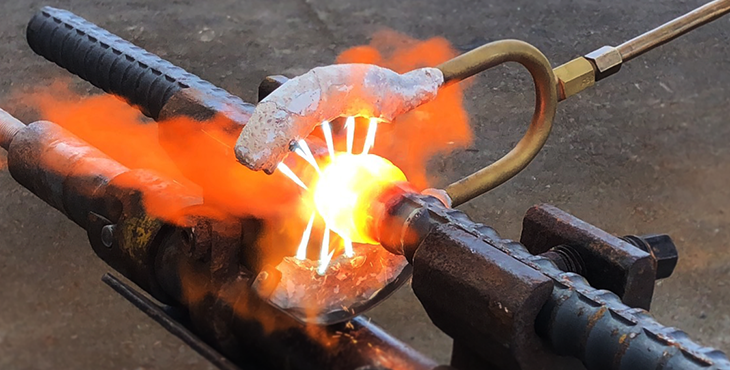
Performance of DAIA Japan Forging Machines
Based on decades of international and domestic construction experience, DAIA Japan forging machines are recognized as one of the most reliable and efficient systems. They have been applied and field-tested in hundreds of construction and infrastructure projects under diverse working conditions.
Key technical advantages of DAIYA machines:
- Full compatibility with a wide range of rebars regarding material, quality, and diameter
- Excellent performance in horizontal and vertical welding positions
- Production of homogeneous, defect-free, and mechanically stable welds
These features have positioned DAIYA as a trusted reference among civil engineers, welding engineers, and technical inspectors worldwide.
Technical Limitations of Riken China Machines
Riken China forging machines exhibit lower component quality, operational stability, and durability compared to international reference brands. Key issues include:
- High wear rate and frequent maintenance
- Acceptable performance only for smaller rebar diameters (14, 16, 18, and up to 20 mm)
- Inability to provide consistent and high-quality welds for larger sizes
Consequently, civil engineers and welding specialists do not recommend Riken machines for critical or high-responsibility projects.
Status of Copied Kenza iran Machines
Copied and incomplete machines marketed as Kenza have been found in various projects. Due to severe pressure and heat fluctuations during welding, inability to weld even 16–18 mm rebars, and premature weld failures, these machines are prohibited in many cities and projects. Welds produced are not approved by technical inspectors or professional associations, and continued use poses significant financial and safety risks.
Professional Recommendation for Purchasing Forging Machines
Based on field experience:
Selecting DAIYA Japan is essential
- All welds will be high-quality, uniform, and reliable
- No project will reject you for using inferior Chinese or Est-Kenza machines
- Your professional credibility is preserved, and welds will not fail
- Embarrassment, reputational damage, and technical problems are prevented
A responsible and professional contractor should choose DAIYA Japan forging machines only for critical and high-responsibility projects to minimize technical and financial risks.
Technical Conclusion
In the sensitive process of rebar butt forging, equipment quality directly determines weld integrity and structural safety. Global experience and field evidence indicate that DAIYA Japan machines provide a reliable benchmark for defect-free and structurally sound welds, while the use of low-quality, copied, or unstable machines introduces serious risks to investments, structures, and human life.
| Comparison Criteria | DAIA Japan | Riken China | Kenza iran |
|---|---|---|---|
| Weld Quality | 👌 Very high, uniform, defect-free | ⚠️ Moderate for small diameters | ❌ Very low, unreliable welds |
| Compatibility with Rebars | ✔️ All diameters and materials | ✔️ Limited up to Ø20mm | ❌ Even Ø16–18mm problematic |
| Operational Stability (Pressure/Heat) | ✔️ Very stable throughout process | ⚠️ Moderate fluctuations | ❌ Severe fluctuations, poorly controlled |
| Equipment Durability | 👌 Very high, long lifespan | ⚠️ Lower, components wear faster | ❌ Very low, frequent breakdowns |
| Maintenance & Repair Costs | 💰 Low (high-quality components) | 💸 Medium to high (weak parts) | 💸💸 Very high (repeated failures) |
| Project Acceptance | ✔️ Widely accepted and trusted | ⚠️ Occasionally accepted in small projects | ❌ Prohibited in many projects/cities |
| Inspector/Association Approval | ✔️ Fully approved | ⚠️ Limited approval in some cases | ❌ Rejected |
| Risk of Weld Failure under Load | 🔻 Very low | 🔻 Medium | 🔺 High |
| Impact on Contractor Reputation | ✔️ Enhances credibility | ⚠️ Possible credibility risk | ❌ Threatens reputation and professionalism |
| Recommendation by Civil & Welding Experts | ✔️ Strongly recommended | ⚠️ Limited recommendation | ❌ Not recommended at all |
🔍 Quick Summary
✅ DAIA Japan:
-
Best weld quality
-
High stability and durability
-
Compatible with all rebar sizes
-
Low maintenance costs
-
Highest customer satisfaction
-
Professional choice for critical projects
⚠️ Riken China:
-
Acceptable only for smaller rebars
-
Moderate operational stability and maintenance cost
-
Not recommended for projects
❌ Kenza iran:
-
Weak and unreliable welds
-
Severe operational fluctuations and weld failures
-
High maintenance and repair costs
-
Disapproved by inspectors, banned in many projects
Contact Us
Head office: unit 9, NO. 67, Asef street, Zaferaniyeh,TEHRAN, IRAN
Head office Tel: 021-22024660
Whatsapp & Telegram: 00989124443599
Email: info@sts-weld.com
STS . All rights reserved